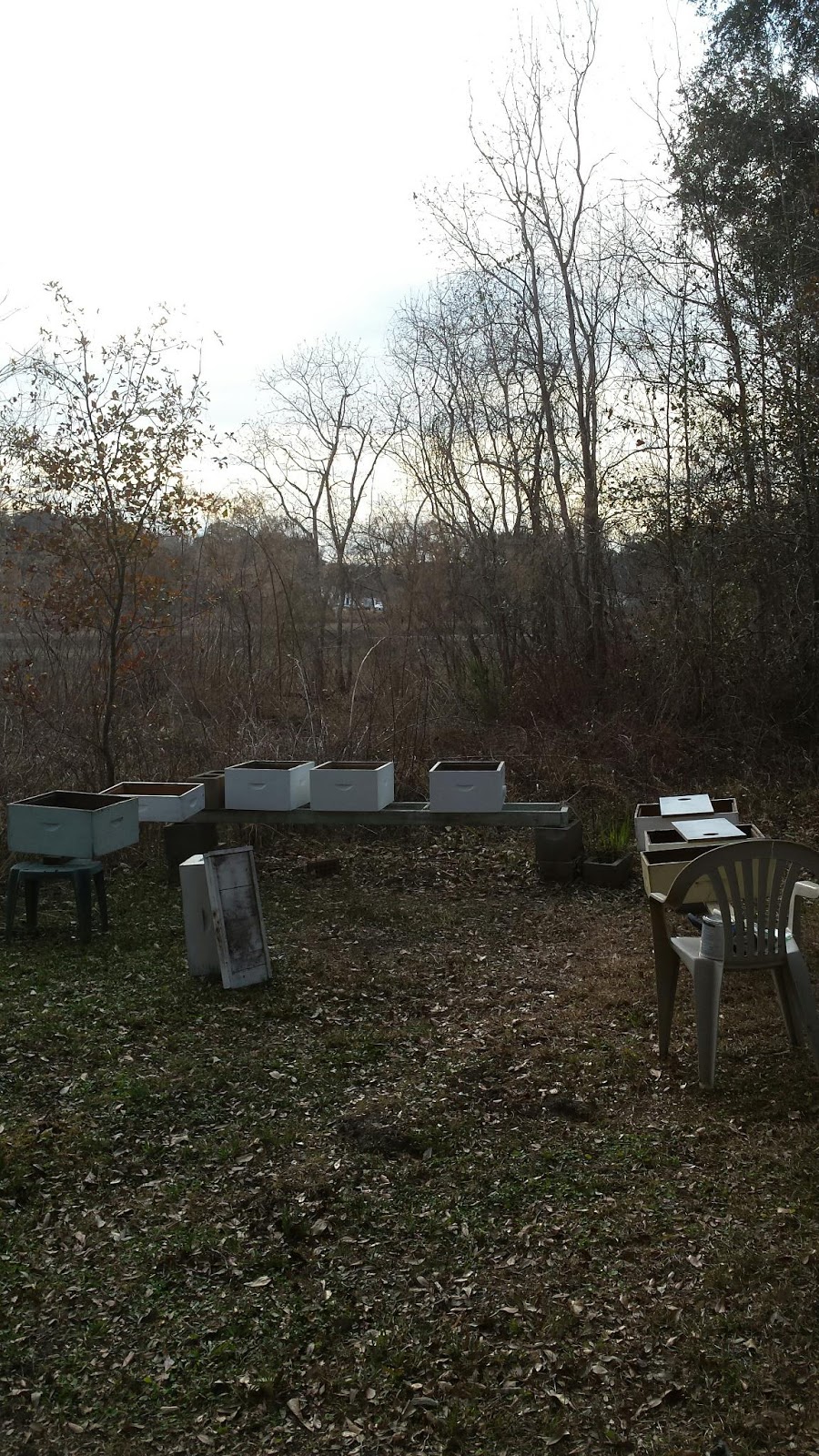
These are notes on queen rearing I gleaned from this morning's Breakfast with (Tony Hogg, Master) the Beekeeper from Full Moon Apiary in Monticello Florida
Queen rearing for a small scale beekeeper
What the status of your queen? Second year queens more likely to swarm. If you have a good queen, build on her to generate new queens. If you have spotty brood, lots drones, it may be time to replace her.
You need a good food source, and lots of nurse bees. If the bee are trying to build up, but the queen is failing, producing more drones than workers, they will swarm. Here in north Florida, the first of March is swarm time.
To handle continuous queen rearing, you'll need 5 hives You can do it with two, but you'll need lots of nurse bees. Double up your brood boxes with 15 days old nurse bees - 2-3 hives are enough to replace your queens and make additiinal splits.
Take advantage of the warm season, on first of March check for swarm conditions. Your hive should have many frames of bees. Get them ready by feeding. In mid-January, add an additional brood box. Feed 1:1, lighter syrup to mimic flow and stimulate rearing. Feed pollen as necessary. A strong hive will raise a strong queen.
Methods
1. Queenless. Tony prefers queenless cell starter. The hive will be strong but sense the queen is gone. This stops the swarm impulse.and emergency queen impulse.
Make a swarm box, add 4-5 inches separated by screen to bottom of nuc box. Upper box has pollen, honey and drawn comb. Fill full of bees. After 24 hours they know they are queenless. This is to start your cells. Then, put back in a queenright box. They will start queen cell on the eggs in the frame. (Check with Tony and make sure this paragraph is right.)
2. Queenright. Feed early, put nurse bees up top and queen down below. You can never have too many nurse bees. In bottom, lots of bees and brood frames and they will build queen cells because they are in emergency mode.
Different techniques to get cells started.
Miller method.
Take a box, put in a frame with drawn foundation with notches on it (see photo below). You'll put this into the box with lots nurse bees. They'll start filling in with drawn out comb. Usually this will be drone. After queen lays eggs pull it out and check the drawn out comb. Cut along the edges to find new eggs from what they built. Smash out cells so they don't build queen cells next to each other. Date it. After 2 or 3 days so you know when she was laying in new cells. Swarm cells will be built on the periphery where they normally want to build them. No need to graft.
http://www.dave-cushman.net/bee/millermethod.html
Note: Eggs and larva susceptible to UV lught. Work quickly in shade. Wrap in damp towel take inside to work. Put this frame into starter box. Put a blank new foundation frame for them to draw out.
Hopkins method:
He will take a newly drawn out foundation frame with eggs and place face down on the top on queenless box.you need a lid spacer for this method. Bees will draw out cells.
On a new frame put 1" strips of foundation with eggs in it., adhere with wax, put in box, they will draw it out. Eggs facing down. Mash down so eggs aren't side by side. Then put in finishing box.
Rule of thumb: start queens on Valentine's day. But can be earlier. Need drones to mate.
Key: drones in purple-eye stage, they will be ready when your queens are.
Micro raising method: Susan Drake: Start queenless with frame of honey, pollen, eggs, pack with nurse bees. See info on line. Cull extra cells you don't need.
Tony said: A queen cell needs 2000 bee visits per queen cell, that's why you need so many nurse bees.
Remember bee life after hatching:
3-11 days old, feeding workers semi royal jelly. Advanced nurse bees
6-11days old they feed queen larvae royal jelly and drones receive worker jelly.
12-17days old wax production time.
Get your hives ready before you start.
Pollen on either side, then emerging larva frames, then honey, then empty with queen cell drawn, in middle.
Find the old queen, put her in box with frames of brood to keep her happy.
You can later combine and or equalize.
Raising a new queen can be used to break the varroa cycle because so many varroa are in brood cells. Treat when you have no capped brood, oxalic or thymol will knock out uncapped brood. In the 10 day cycle while she's mating then 8 days later she's been laying and they start to cap. At 21 days, no capped brood then treat and it will really knock varroa down.
After honey harvest is a good time to raise new queens. In mid or late june. Still have nectar and pollen, but if not feed. Also good time to split or increase
Drones must be flying. If pollen stops coming in for 2-3 days bees will eat drone larvae. Five days, they will kick out the drones. So in June, raise queens, knock down varroa
Cloche board, bottom board with queen excluded, shuts off queen pheromones. (This is picture 2 below) Set up: brood box, clothe board, other broil box.
Turn active brood box around 180 degrees. Put 2nd box on top facing original direction. Slide in divider for 24 hours. Box on top is where the starter frame is put. You can create/move honey, drawn comb, couple of blanks etc from bottom to top. Shake in bees from other box, without a queen. After 24 hours, put in the queen cell starter egg frame. Leave rotated box as is, no need to switch back.
For good build up put on second deep by middle of month of January.
To set up a starter box put two frames capped honey, two frames pollen, put queen in a vacation nuc box. Put a frame of young brood between pollen, then near emerging in this starter box and lots of nurse. Then, go through both boxes for the best frames. Capped frames, ready to emerge, and frames with youngest brood, no eggs in this, eggs can go into queen vacation nuc.
Now ready to construct starter. Shake in as many bees as possible close up for 24 hours. Or put in clothe board. Then, put in Miller method egg frame. Check after 24-36 hours and should see queen cells being build. No queen cells? The queen may still be in there. Or may be a new small queen you didn't see. You can put queen from vacation nuc back into the other brood box box.
Don't let either of them be too weak. Use drawn comb so laying begins immediately.
Miller frame should produce 10 queen cells. At 10 days after they start, cut around with a cell sharp knife to move a cell to another box. Or put it in a cell protector. From day 10 on they are sturdier and able to move. Don't let them chill. You can candle the cell in protector to see how they are moving if your keeping the cell for a later nuc.
There's a queen rearing chart on our site from OSU. Plug in dated to know each stage. 12 hours makes all the difference.
When do you put in drawn cells? Queenless for 24 hours best for introducing cell. I'd you end up with a live virgin queen, leave 72 hours for better acceptance.
Be ruthless. Don't baby weak hives or mutt queens. Raise a new queen.
Drone comb will be built on damaged comb. Use green foundation to see it easier and put between edge and food source, not in center.
Evaluate your local queens
Tony Tricks: queen excluder on bottom of box, shake out all bees into box. All will pass through, but queen will be on the excluder
Opposite way, put excluder in between two boxes, shake off all bees, put top back on upper has brood, nurse bees and others will move up leaving queen on bottom. Takes about an hour. Shake all bees off of top. Great way to harvest nurse bees.